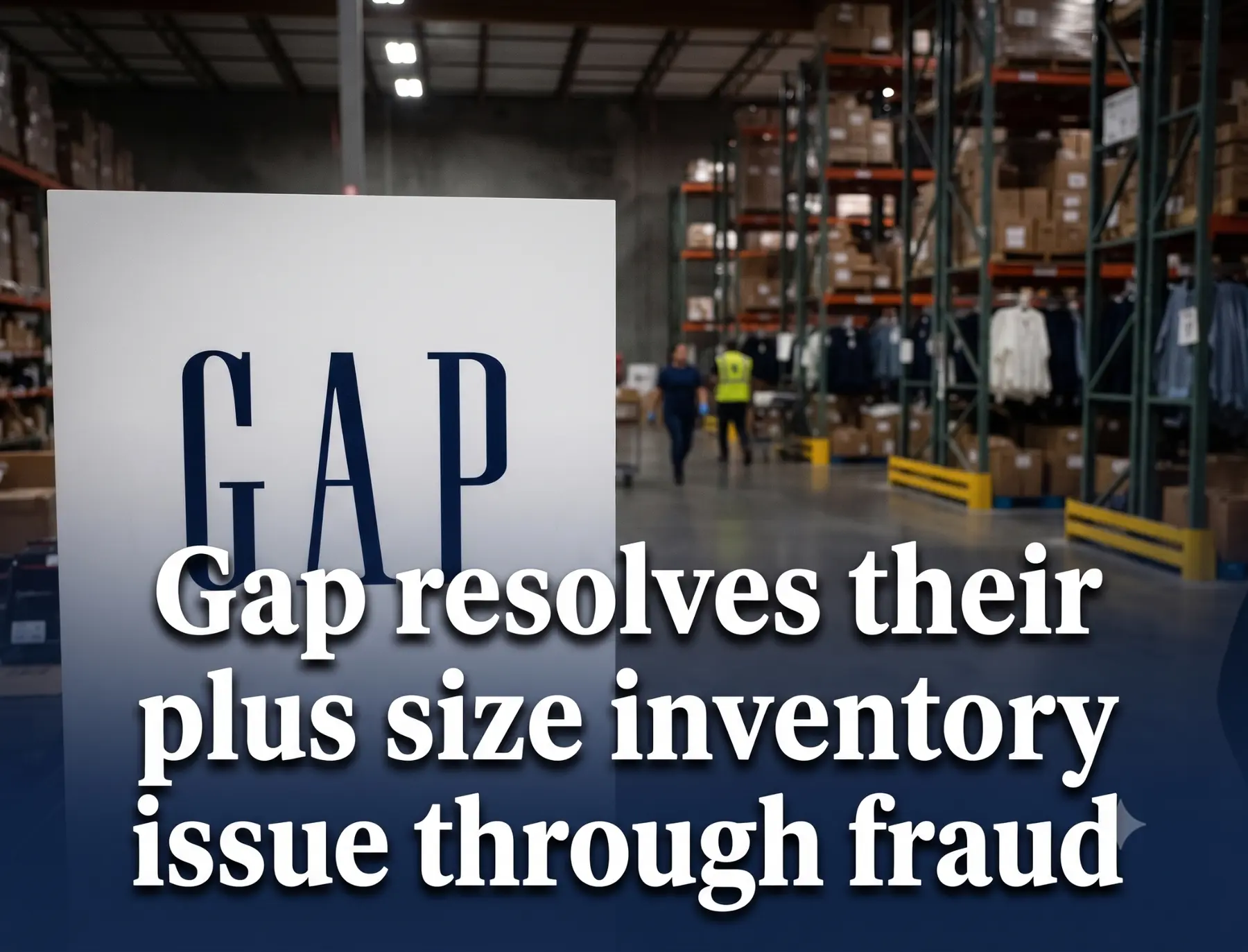
It is easy to talk about 11.2 million garments as a single, abstract figure. It is not one. It is millions of individual cartons, each one scanned out of a specific distribution center, loaded onto a specific trailer and recorded on a specific manifest line before it ever reached a Florida warehouse.
What a single carton can prove
A distribution-center outbound scan records what left a facility, in what quantity and, typically, in what size breakdown. A bill of lading records what a specific trailer carried. Individually, each document is mundane. Together, they can show exactly what Gap says it shipped, at the level of one carton.
Multiply by 300 trucks
More than 300 truckloads moved this transaction. Each one has its own manifest. Stacked together, those records would form a complete, carton-by-carton account of the shipment — origin, size mix and destination for every piece of the 11.2 million units, capable of settling the gap between Gap's 25-30% figure and SVES's 90%-plus count.
The trail does not need to be built. It needs to be opened.

Why the trail hasn't closed the question
None of this requires new technology or a new theory of the case. Distribution-center scans, manifests and bills of lading are standard retail records, generated automatically in the ordinary course of shipping. What has kept the dispute open is not the absence of a traceable record. It is that the traceable record has not been assembled and released in a form that connects the ATS files to the trucks to the warehouse counts.
Traceability, in this file, is not a technical limitation. It is a choice about whether to open records that already exist. Gap has the scan data. SVES has the physical count. The distance between the two is not a mystery about what happened — it is a decision about who gets to see the paperwork that would prove it.